
What Is PACE? Michigan's All-Inclusive Care Program for Seniors
Most families in Oakland County have never heard of PACE, and the ones who have usually heard the name without the substance. It is one of the more useful programs available to an older adult in Michigan, and also one of the more misunderstood, partly because the name gives away nothing at all.
PACE stands for Program of All-Inclusive Care for the Elderly. The short version: for someone who qualifies, it replaces the scattered pieces of medical care, therapy, transportation, day programming, and in-home help with a single organization that provides and pays for all of it.
That is a real thing, it exists here, and it is worth understanding before deciding it is not for your parent.
What PACE actually is
PACE is a Medicare and Medicaid program. An organization takes responsibility for a participant's entire care, and receives a fixed monthly payment to do it. Because the organization is paid the same whether the participant does well or badly, the incentive runs toward keeping people healthy and out of hospitals.
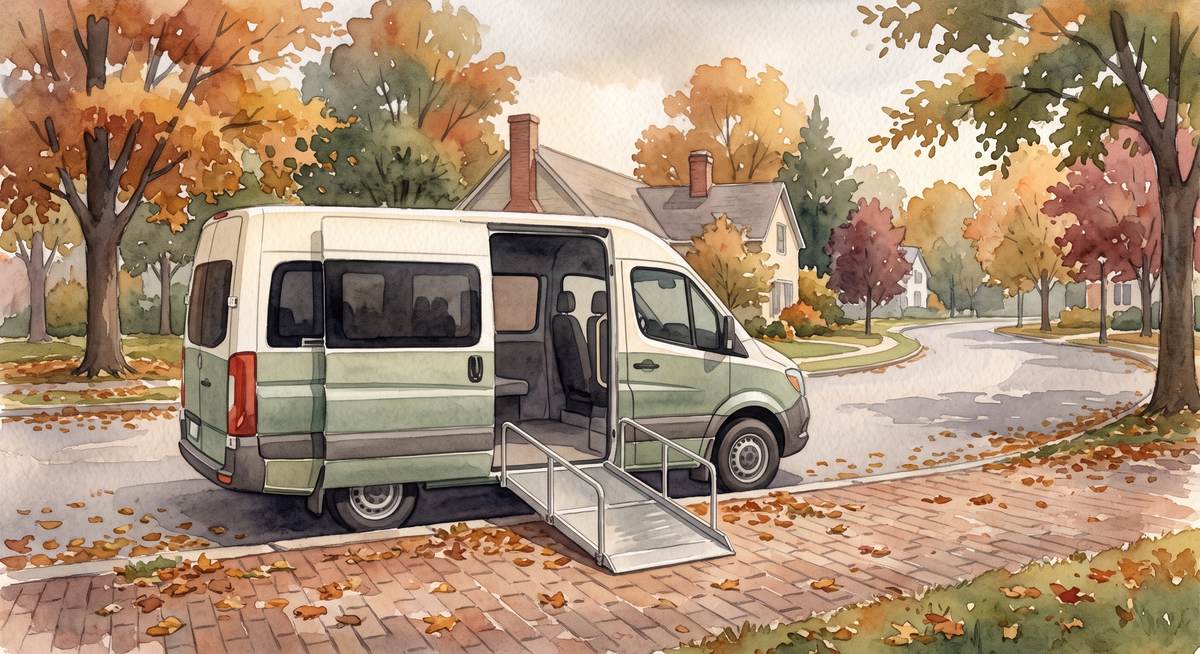
In practice a participant gets a care team, a day health center they can attend, primary medical care, specialists, therapy, prescriptions, transportation to appointments, and help at home. The team meets and coordinates as one group, which is a sharp contrast to the usual arrangement where a cardiologist, a neurologist, a primary care doctor, and a home care agency are all working on the same person with no real contact between them.
Fifteen PACE organizations hold Michigan contracts, according to the CMS plan directory for August 2026, and the one covering metro Detroit is PACE Southeast Michigan.
Here is the part that matters most to our own neighbors, and we would rather say it plainly than let a family find out at the assessment. PACE Southeast Michigan's published service area does not include Troy. It covers all of Macomb County, a list of named Wayne County cities, and a list of named Oakland County cities. Troy is not on that Oakland list, even though a ring of towns around it is: Royal Oak, Madison Heights, Birmingham, Clawson, Rochester and Rochester Hills are all in, and so is every Macomb community next door, including Sterling Heights.
Service areas change, and they are set city by city rather than county by county, so the only answer worth acting on is the one you get from the organization with your parent's address in hand. Ask before you assume either way.
Who qualifies
Four things have to be true. The person is 55 or older. They live in a PACE organization's service area. They meet a nursing facility level of care, meaning the state agrees their needs are serious enough to justify nursing home placement. And they can live safely in the community with the support PACE provides. Michigan adds one more to its own eligibility policy: the person must not be living in a nursing facility on the day they enroll.
That third condition surprises people. PACE is not for someone who needs a little help. It is built for people who genuinely qualify for a nursing home, and it exists to give them an alternative to entering one.
PACE will not sit alongside another program. Michigan's eligibility policy says a PACE participant cannot also be enrolled in the MI Choice waiver or in an HMO, so families already using MI Choice are choosing between them rather than stacking them.
The federal rule goes further, and this is the part that surprises people later rather than sooner. Enrolling in PACE ends enrollment in any other Medicare or Medicaid prepayment plan or optional benefit. And choosing one of those after joining PACE counts as voluntarily leaving PACE, with the hospice benefit named in the regulation as an example.
That last point deserves its own sentence, because of who reads this page. A family whose parent is on PACE and later elects the Medicare hospice benefit has, in the program's terms, disenrolled from PACE. It is not a penalty and it is not a trick; PACE is already responsible for end-of-life care, so the two are alternatives. But it is a decision worth making deliberately, with the care team, rather than discovering it after a signature.
What it costs
For someone who has both Medicare and Medicaid, there is no monthly premium for the PACE benefit, and no copays or deductibles on care the team approves.
"No premium" is not quite the same as "no cost," and the difference is worth knowing. Michigan calculates a patient-pay amount if a PACE enrollee is admitted to a nursing facility or a hospital, and the PACE organization collects it. Michigan also runs an income test for PACE at 300 percent of the federal benefit rate, and its policy is explicit that eligibility there cannot be reached by carrying a patient-pay amount or by meeting a deductible.
For someone who has Medicare but not Medicaid, the picture changes. That person pays a monthly premium covering the long term care portion, the part Medicaid would otherwise pay, and continues paying their regular Part B premium. This is not a small amount, and it is the reason PACE works out best for people who are dually eligible.
There is no charge for care the team authorizes, whatever it costs. That is the trade the fixed payment buys.
What it covers that Medicare alone does not
Medicare is a medical program. It pays for doctors, hospitals, short rehabilitation stays, and prescriptions. It does not pay for someone to help a person bathe, and it does not pay for the ordinary supports that decide whether an older adult can keep living where they are.
PACE covers everything Medicare and Medicaid cover, and then the care team can authorize what it judges the participant needs beyond that. In practice that reaches things families are used to paying for themselves: personal care at home, adult day programming, meals at the day center, transportation to and from appointments, and commonly dental, vision, and hearing care, which traditional Medicare largely leaves out.
That last group matters more than it sounds. Untreated hearing loss and an unrepaired set of dentures do real damage to an older person's health and their willingness to be around other people, and both routinely go unaddressed because nothing pays for them.
The part families should hear before enrolling
Here is the catch, and it is a real one, so we would rather you hear it from us than discover it in month two.
When someone enrolls in PACE, that organization becomes their sole provider. Participants use PACE's doctors, PACE's specialists, PACE's hospitals and home care. Care received outside the network without prior authorization can leave the participant personally liable for the cost. Emergencies are the exception, and so is urgent care away from home: the rules require PACE to cover urgently needed out-of-network and post-stabilization services when the organization approves them, or when it was asked and did not answer within an hour.
For a family whose parent has seen the same internist for twenty years, that is not a small ask. Some people find the coordinated team more than worth it, because the care finally talks to itself. Others cannot accept giving up a doctor they trust, and that is a legitimate reason to say no.
A participant can request an out of network specialist when the care team agrees it is needed, so it is not absolute. But the default is the network, and going in expecting otherwise is how families end up unhappy.
PACE and residential care are not opposites
This is the piece almost nobody knows, so we want to be clear about it even though it sits close to our own business.
PACE is often described as a way to avoid moving a parent into care. That is the usual case. But the residence rule Michigan actually applies is narrower than people assume. What its policy excludes is living in a nursing facility at the time of enrollment. A licensed adult foster care home is not a nursing facility, and no eligibility rule excludes one. Most Michigan participants are in their own homes and the residential arrangement is less common, so treat it as a question for the PACE organization rather than a settled yes, because the organization decides whether it can care for someone safely in the setting they live in.
So the choice is not always PACE or a small licensed home. For some families it turns out to be both, with the residential setting providing daily life and supervision while PACE handles the medical side.
For our own two homes the question is settled by geography rather than by rules: Troy sits outside PACE Southeast Michigan's published service area, so that particular pairing is not on the table here. We are telling you about the combination anyway, because for a family looking at a licensed home in one of the covered cities it is real, and because nobody else seems to mention it.
We mention this because families sometimes rule out one option believing it cancels the other. If PACE fits your parent and a small licensed home also fits your parent, that combination is worth asking both sides about directly rather than assuming.
Whether to look into it
PACE is worth a serious look if a parent is 55 or older, would qualify for a nursing home on paper, is still safe at home or in a supported setting, and has Medicaid or is close to qualifying. It is worth much less if they are healthier than that, or if the loss of their existing doctors is a dealbreaker, or if the private premium is out of reach.
The enrollment conversation happens with the PACE organization itself, which does its own assessment. A local Area Agency on Aging can also walk a family through whether it is a reasonable fit before anyone applies.
The reason we write about PACE at all is simple. Families in Troy and around Oakland County make these decisions with whatever information happens to reach them, and this program reaches almost no one. Knowing it exists, and knowing exactly what it asks in return, is better than finding out about it years later from a neighbor.